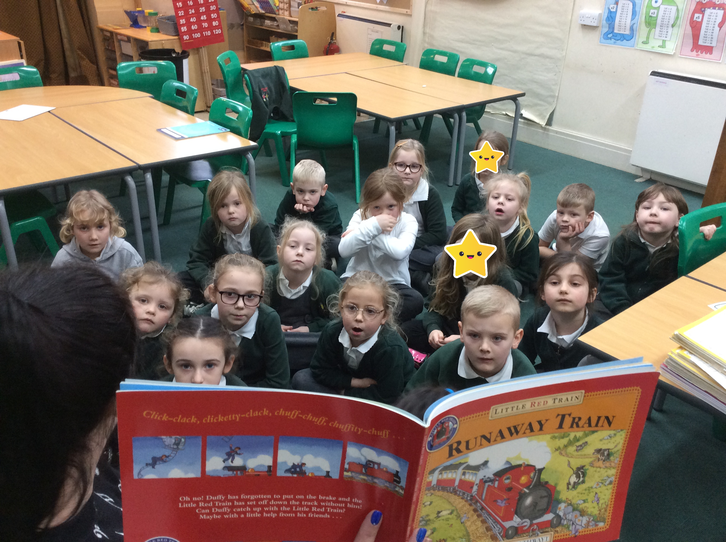
We love reading at Combs

The Importance of Reading
Here at Combs Infant School we are committed to helping our whole school community develop enthusiasm for reading.
“Books enable children to discover new worlds, meet new people and learn about the past, but they also have the power to transform lives. By sparking growing imaginations, stimulating critical thinking and helping to develop empathy, reading gives children the very skills they need to succeed at school, at work and in life.”
Cressida Cowell, author of How to Train Your Dragon
Assessing the children’s reading
Children’s reading progress is regularly assessed as they progress through school. They are assessed regularly through the schemes, and through teacher assessment. As the children join Key Stage 1, their reading skills are tested using both NFER and Burt reading tests. As we are a small school, we are lucky enough that staff can communicate about children’s progress on a regular basis, if any gaps or concerns are identified regarding a child’s reading progress, this is acted upon quickly with the appropriate intervention put in place.
What we do to help celebrate the joy of reading
Our curriculum is designed to provide our children with a vast range of rich experiences that expose them to the wider world through books.
At Combs we take every opportunity for the children to read. Teachers read to the children daily, the children access their reading books every day, each subject or area of learning that the children experience are linked to high quality texts and the children’s environment is thriving with a plethora of books to read.
The children have the opportunity to attend a weekly book club and every week, both classes join together to provide the opportunity for the children to paired read with other children that are no in their class. Throughout the year both classes focus on different authors, this enables the children to learn more about specific authors and their stories that they have written.
are a more productive time for reading.
- Praise/feedback - Get into the habit of telling children what they have done right instead of what they have done wrong e.g. “I liked the way you used expression” or “You worked out that difficult word all by yourself”. This is far more motivating. Don’t correct every mistake. When children are corrected too much, they are scared to try for themselves and become frustrated or lacking in confidence.
- Introduce the book - Books must be introduced, presented, talked about and savoured together. Do some research, look at reviews, websites with book suggestions and explain why you think it will appeal to the child.
- Reviews - For children hooked on books, encourage them to exchange ideas on what they thought about a book, reflect, and be critical. Encourage them to bring a book from home and share it with the class with a written book review. Suggest that they write a letter to their favourite author. Many authors have their own websites or forums to write book reviews. Respect your child’s opinions and tastes without banning certain books that they will just cling to more fiercely.
- Take turns reading - This gives children a break and an example to emulate. Break up the character parts so you can take turns to read. You read one page and they read one. Read for a few minutes until you get to a very exciting bit and then ask them to continue and tell you what happens next.
- Comprehension - Talk about what you read together and what they read independently. How the child thinks a character is feeling, what they would do in that situation, what is going to happen next, retell the sequence of events and work on inference.
We greatly appreciate all the support you give in helping and encouraging your children to read at home. For more advice follow the Book Trust link below for ideas about how to foster a love of reading in all of your children - from babies to teens!

|
Book Trust - Inspire a Love of Reading! | Link |

|